There’s a lot to learn about Flexi-Pave and it’s diverse benefits and applications. We have taken the time to find and post news articles, studies, client write-ups, and other articles discussing our products and related issues. These informative news items will help you come up to speed not only on the Flexi-Pave products, but the practical construction and environmental challenges that these products were created to solve.
DDOT Endorses Flexi-Pave for Citywide Use
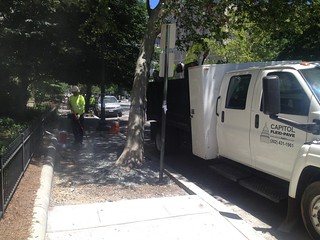
Washington DC is the latest municipality to adopt Flexi-Pave for use as Tree Surrounds and city Sidewalks. Starting in May 2013, Capitol Flexi-Pave entered into a multi-year contract with DDOT to replace failing tree surrounds and sidewalks throughout the city. But rather than just replace the tree grates or fill in the 4’x10′ tree pits with Flexi-Pave, UFA & DDOT decided to take it one step further and actually improve the microenvironment fo the district trees. This is being accomplished by enlarging the tree boxes to approximately 18′ wide and and deep as the current sidewalk is. After the failing concrete is removed, the soil is aerated with a Supersonic Air Knife and Soil Amendments are added to the soil. Then the flexible porous paving is installed flush with the existing sidewalks and paved up to the tree trunk so the soil will no longer be compacted by heavy pedestrian foot traffic, especially in areas near bus stops. Special installation techniques are used where the Flexi-Pave meets the buttress roots of the trees so that as the trunks continue to grow in diameter, the Flexi-Pave can self-adjust without girdling the tree.
View this news item
Georgetown Tree Surrounds in the News
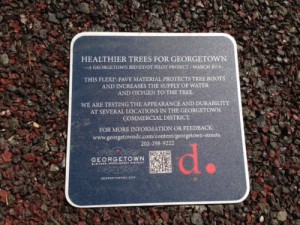
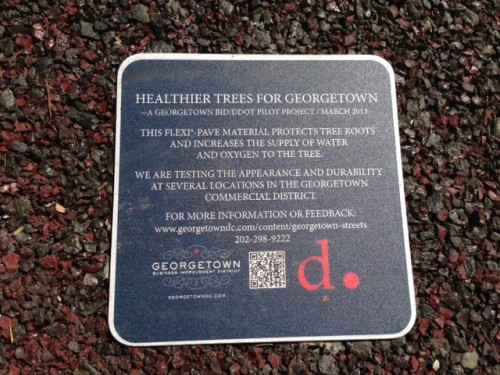
Wondering what the new tree surrounds in Georgetown were all about? Read the signs! Then read more about it in DC’s Neighborhood Blog PoPville.
View this news item
Georgetown begins Flexi-Pave pilot program
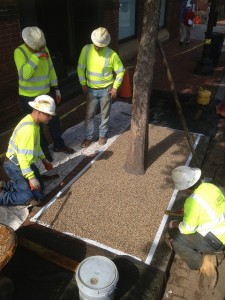
Recognizing the challenge keeping trees alive while being trampled by thousands of pedestrians along narrow sidewalks to patronize the high end shops and restaurants in Georgetown, the Business Improvement District needed a solution. John Wiebenson & Johnathon Kass of the Georgetown BID consulted with DDOT officials and the Urban Forestry Administration’s director John Thomas and Urban Forester Joey Perez. They began exploring alternative solutions to meet both the pedestrian safety and tree preservation goals. Flexi-Pave quickly rose to the top of the list of options, so a pilot program on M Street Northwest was started in early 2013 to evaluate the effectiveness of installing Flexi-pave as a replacement for cast-iron tree grates and compacted dirt filled tree boxes. Initially 5 tree boxes were decompacted using the Supersonic Air Knife before being paved with the Flexible Porous Paving material Flexi-Pave which is made from recycled tires and an elastomeric binder so it will allow for continued tree growth without harming the trees as well as allow air and water to pass through to the critical root zone. Read more about it in this article from the Georgetowner.
View this news item
Total Maximum Daily Loads – the 411
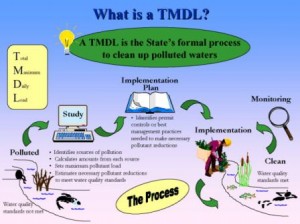
To alleviate the problem of eutrophication, EPA created the Clean Water Act to require states to adopt Total Maximum Daily Loads (TMDL) limits as the basis of their water quality improvement. Flexi-Pave has proven to be a cost effective solution for the removal of nutrients from storm water and reducing nutrient pollution. A long term water quality study conducted in 2010 by a Civil Engineering & Environmental Firm showed an amazing 83% reduction in nitrates and an 88% reduction in phosphates from contaminated water flowing through Flexi-Pave.
View this news item
Eutrophication – the problem with the Bay

So what is eutrophication? H.W. Art, defined eutrophication as “The process by which a body of water acquires a high concentration of nutrients, especially phosphates and nitrates. These typically promote excessive growth of algae. As the algae die and decompose, high levels of organic matter and the decomposing organisms deplete the water of available oxygen, causing the death of other organisms, such as fish. Eutrophication is a natural, slow-aging process for a water body, but human activity greatly speeds up the process.”
View this news item
Whats the deal with Phosphates & Nitrates?
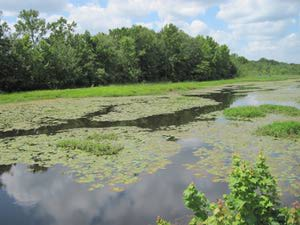
The problem with runoff from impervious surfaces is that as water runs off these surfaces it collects contaminants and byproducts of vehicular traffic, agriculture, manufacturing, etc., such as nutrients, trace metals, oil and grease. These contaminants can include harmful elements such as nitrates and orthophosphates. These pollutants concentrate in storm drains and eventually make their way into bodies of water such as our Chesapeake Bay. Once there, the nitrates & orhthophosphates become food sources for algal blooms which are the first step in the eutrophication.
View this news item
Chesapeake Bay at Risk of Slow Death

The Chesapeake Bay is at risk of becoming a large “dead zone” from contaminants in stormwater runoff.
View this news item
City of Gaithersburg, MD Considers Using Flexi-Pave
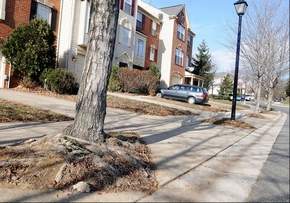
After seeing the successful installation of a 14,000 square foot fitness trail made out of Flexi-pave at Lockheed Martin’s Gaithersburg campus, the City of Gaithersburg is considering using Flexi-pave on city sidewalks and tree surrounds.
View this news item
Smithsonian Institution’s National Zoo Embraces Flexi-Pave
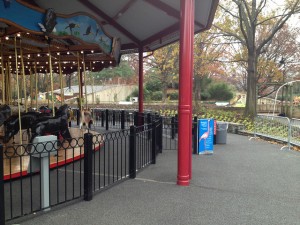
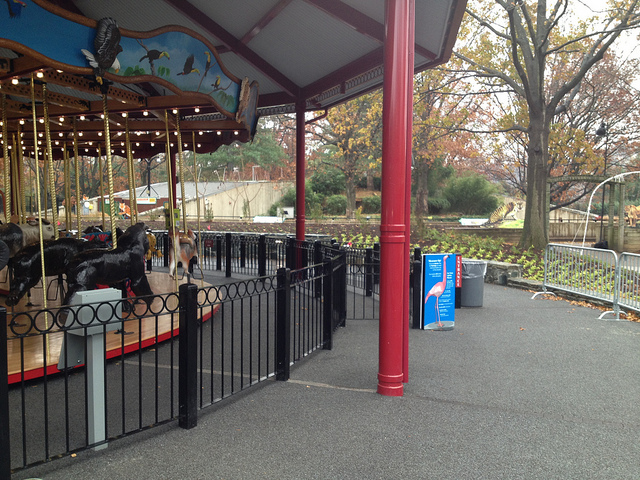
Washington DC’s National Zoo is the latest site to begin installing Flexi-Pave on a large scale. In 2012, Flexi-Pave was installed at two locations at the National Zoo. One of which was the long awaited Conservation Carousel that was built adjacent to the Lion & Tiger exhibit. The carousel is solar powered and features zoo animals rather than traditional horses. All the paving around the carousel, totaling almost 7,000 square feet was poured with Flexi-Pave. Flexi-Pave was chosen for it’s intrinsic properties including stormwater retention, LEED, LID, ADA compatibility and recycled materials. The Carousel is now open to the public so stroll on down the Olmestead walk and kick the proverbial tires of the Zoo’s latest additions. Read more about it at the Zoo’s Carousel website showing all the stats.
View this news item
The Country Club at Woodmore Finds Perfect Solution to Bridge Restoration Using Flexi-Pave
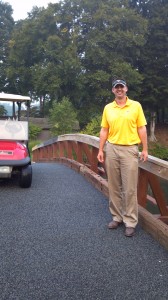
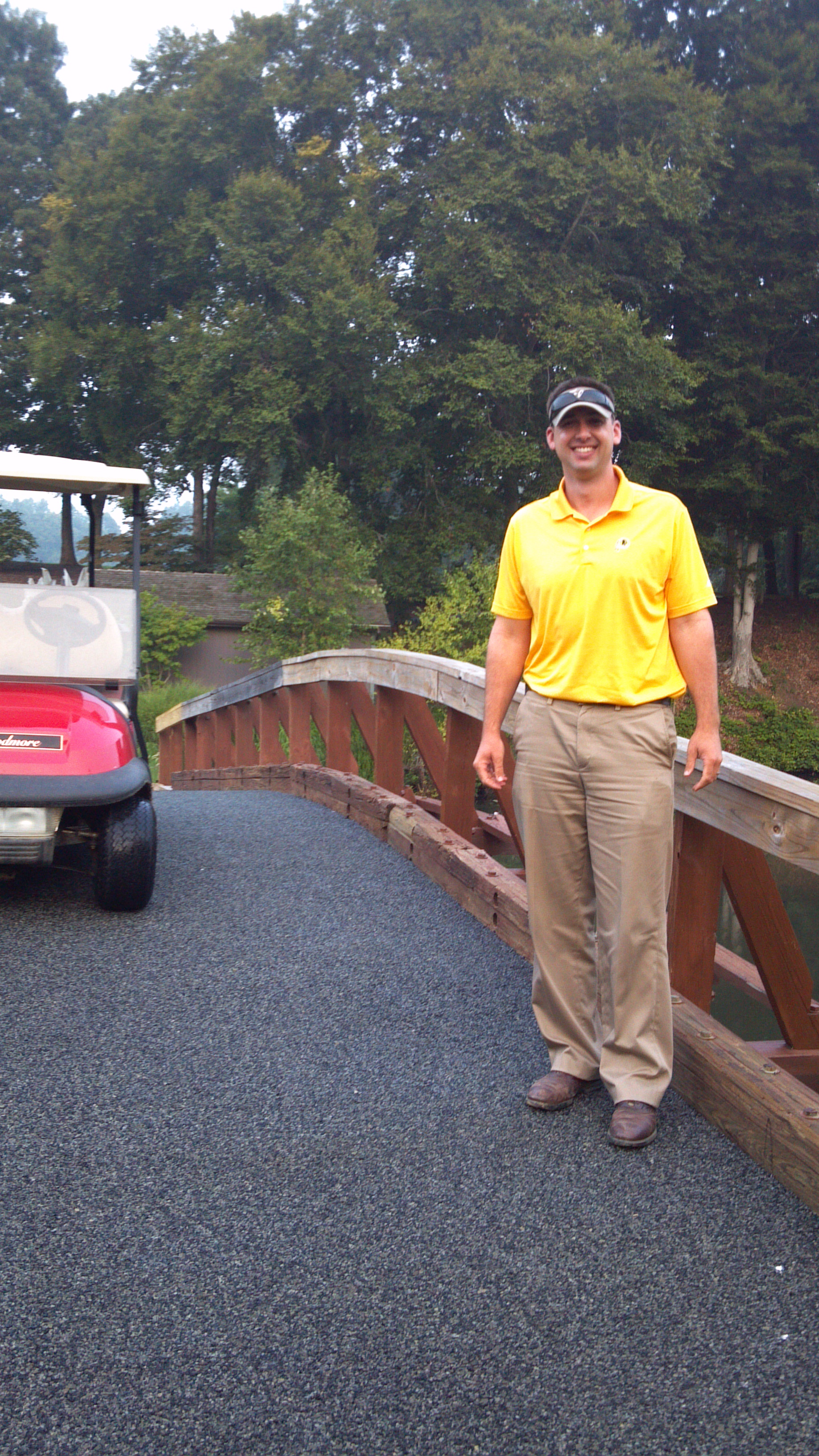
Golf course bridges are one of the most frequently replaced assets on the course. Through thermal expansion, UV degradation and water damage, wooden bridges don’t typically last more that 10-15 years. After which time they must be rebuilt at great costs, not including lost revenues from down-time for the course. Until recently wood replacement was thought to be the only option. But Flexi-pave offeres a solution that encapsulates the wood with a durable weatherproof material that extends the useful life of the bridge another 30+ years. Don’t take our word for it, read more about it from the Country Cub’s own Blog.
View this news item